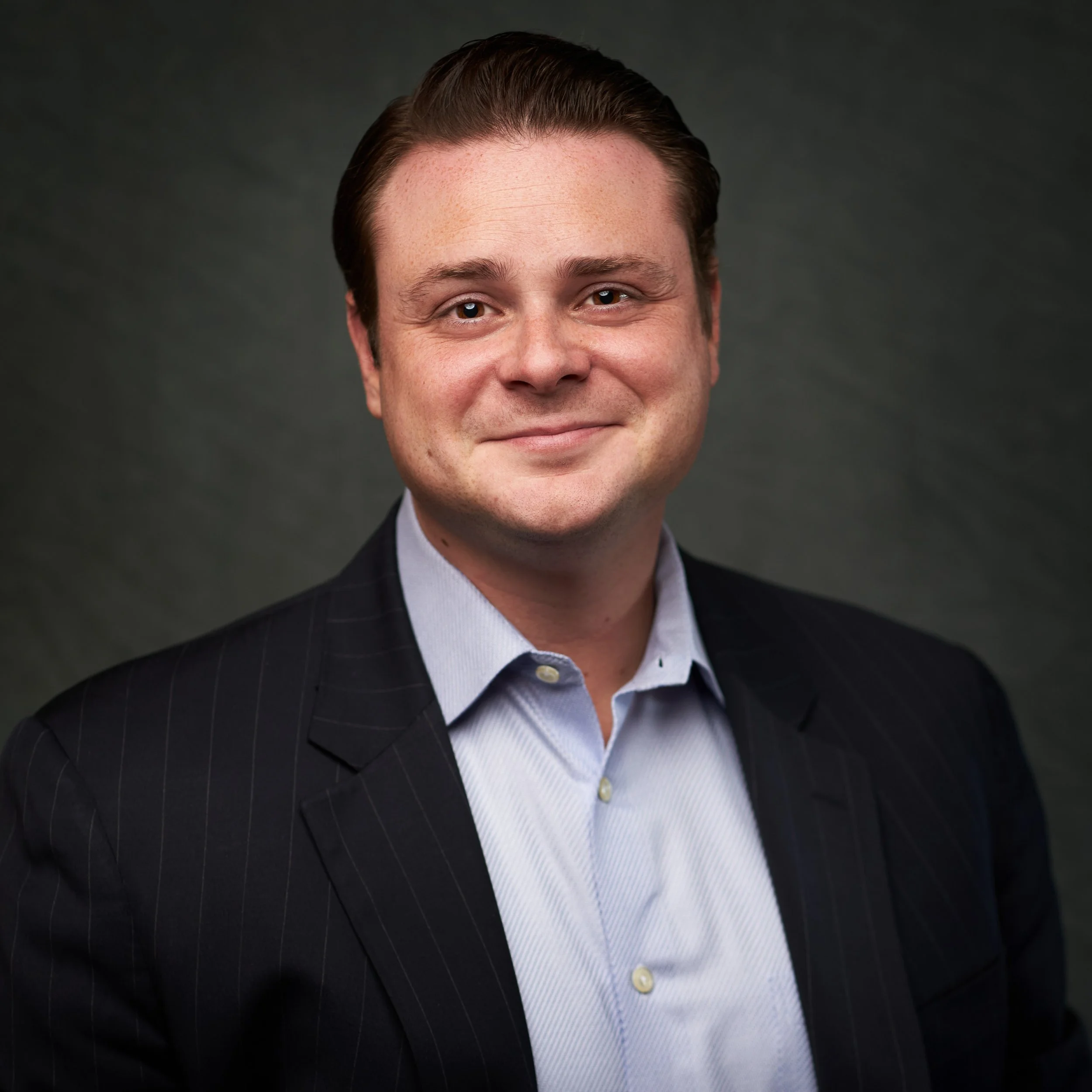
Anthony W. Orlando is a leading scholar and consensus-builder who uses data and history to unpack complex financial and economic challenges that face today’s leaders.
He is an Associate Professor in the Finance, Real Estate, & Law Department at California State Polytechnic University, Pomona, where he holds the Tarkington Family Endowed Chair. He serves as the Director of the Tarkington Business Futures Institute. He also serves on the Public Finance Authority Board for the La Verne Enhanced Infrastructure Financing District, the Human Services Commission for the City of Pasadena, the Board of Directors of the Cal Poly Pomona Philanthropic Foundation, and the Board of Editors of the Journal of Law, Medicine, & Ethics.
-
Dr. Orlando is an Associate Professor of Finance, Real Estate, & Law at California State Polytechnic University, Pomona, where he holds the Tarkington Family Endowed Chair. He serves as the Director of the Tarkington Business Futures Institute. He also serves on the Public Finance Authority Board for the La Verne Enhanced Infrastructure Financing District, the Human Services Commission for the City of Pasadena, and the Board of Directors for the Cal Poly Pomona Philanthropic Foundation. He previously served as Visiting Scholar at the Federal Reserve Bank of Atlanta from 2018 to 2024.
Dr. Orlando teaches and conducts research at the intersection of finance, real estate, and public policy. He has published over two dozen peer-reviewed academic articles, as well as the book Keeping Races in Their Places: The Dividing Lines That Shaped the American City. His work has been profiled in top media outlets including the New York Times, Los Angeles Times, Washington Post, and Bloomberg. He serves on the Board of Editors of the Journal of Law, Medicine, & Ethics.
Dr. Orlando received a Bachelor’s in economics from The Wharton School of the University of Pennsylvania, a Master’s in economic history from the London School of Economics and Political Science, and a PhD in public policy and management from the University of Southern California. He is a CFA charterholder and a member of the CFA Society of Los Angeles.
-
His latest academic publication in real estate, “Preserving Affordable Rural Rental Properties by Understanding Owners, Managers, Subsidies, and the Local Market,” appears in a recent issue of Housing Policy Debate. Other recent work includes an article in the Journal of Urban Affairs assessing how land use may change as cities adapt to the post-pandemic future; an article in Cityscape investigating the role of the Community Development Block Grant program in mediating the impacts of natural disasters on rental housing markets; and an article in the Journal of Housing Economics decomposing break-even rents and costs for new multifamily housing development.
-
His latest work in finance, “Borrowing on the Wrong Side of the Tracks: Evidence from Mortgage Loan Discontinuities,” was published in the Journal of Banking & Finance. Other recent work includes an article in the Cambridge Journal of Economics studying the role of hedge funds in the market for mortgage-backed securities and an article in Inquiry: The Journal of Health Care Organization, Provision, and Financing measuring the COVID-19 financial threat to hospital markets.
-
His latest work in public policy, “The Government Built It, and the Private Sector Came: For-Profit Health Care, Government Support, and the Road from Public Service to Private Equity,” was published in the American Journal of Law & Ethics. Other recent work includes an Economic Roundtable report on the consequences of cutting the Medicaid budget; an Economic Roundtable report assessing the rent stabilization formula used by the City of Los Angeles; and an Economic Roundtable report exploring approaches to reduce homelessness in the run-up to the 2028 Olympics in Los Angeles
-
In the entertainment industry, Orlando has produced the feature films Autumn Lights and Lazy Eye. From 2017 to 2018, he hosted and produced the podcast “Our American Discourse,” sponsored by the USC Bedrosian Center.